

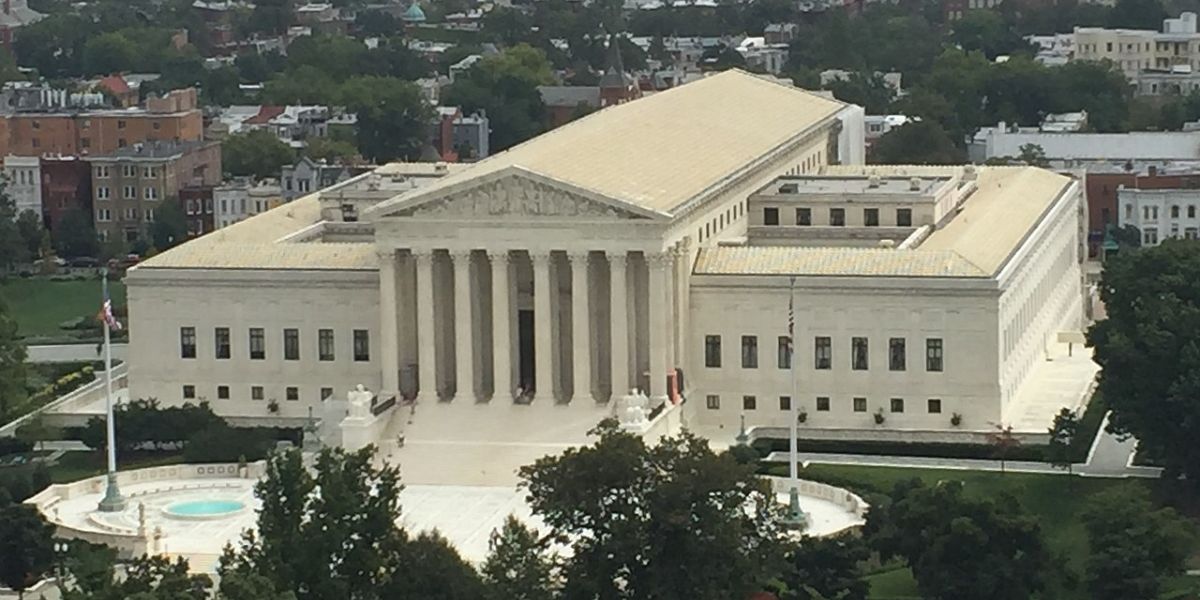
Supreme Court Backs FCC Power to Levy Fines Against Cellphone Carriers
In a decisive 8-1 verdict, the U.S. Supreme Court protected the Federal Communications Commission's enforcement machinery, rejecting constitutional challenges launched by AT&T and Verizon.
Editorial Analysis
Published June 2026 • 8 min read
The Constitutional Battleground
The main issue presented by the telecom industry's biggest players, such as AT&T and Verizon, was that there is an unconstitutional flaw in the internal process of forfeiture orders by the FCC due to the violation of the Seventh Amendment. This constitutional protection ensures that the citizenry is entitled to have a jury in cases where civil fines can apply. Telecoms were of the opinion that since the FCC administrative fines could reach into tens of millions of dollars, they needed to be proven to a jury.
"The Court concluded that FCC forfeiture orders do not create an immediate, binding legal obligation to pay. Therefore, the commission does not infringe upon a company’s right to a jury trial prior to issuance."
— Supreme Court Decision SummaryWhy the Court Ruled 8-1
The overwhelming majority agreed that an FCC forfeiture order is merely an intermediate step. In plain English, when the Federal Communications Commission (FCC) issues a "forfeiture order" (a fine), the targeted wireless carrier has no immediate, enforceable obligation to write a check.
Instead, if the carrier refuses to pay, the federal government must initiate a collection lawsuit in a U.S. District Court. This is the time when the shipper would be able to raise his constitutional objections to the law. Since fines do not involve direct seizure of money, they cannot be challenged under the Seventh Amendment.
The Administrative State and the 'Public Rights' Balance
This ruling arrives at a critical juncture for administrative law, especially after such skepticism towards regulatory overreach by federal agencies as shown through rulings such as *SEC v. Jarkesy*, and even more notably the reversal of the Chevron doctrine in *Loper Bright Enterprises v. Raimondo*. The telecommunications carriers attempted to take advantage of this situation by arguing that the fines levied against them by the FCC constituted a direct punishment against private individuals without judicial review.
However, through highlighting the distinction between the multistep forfeiture procedure adopted by the FCC and instant execution, the court made sure to maintain an important exception. In his majority opinion, Justice Kavanaugh stated that the reason why there was no violation of the Seventh Amendment was that an administrative fine was merely a pretrial notice of penalty until it was brought forth in a debt collection lawsuit initiated by the Department of Justice.
This critical separation-of-powers distinction ensures that the FCC can continue to act as an agile watchdog over consumer privacy. It also provides a strategic roadmap for other federal agencies facing administrative challenges, demonstrating how multi-layered enforcement processes can survive rigorous constitutional scrutiny in a deeply skeptical judicial climate.
The Roots: Customer Location Data Breaches
Specifically, this particular suit stems from fines of several million dollars imposed by the FCC over the handling of customer location data. Major companies were fined by the FCC for their sale of customer location data to aggregators that then proceeded to sell the data to third parties, including bounty hunters and other tracking services. This decision ensures the FCC’s main weapon in terms of enforcing consumer privacy remains intact, enabling them to act swiftly without getting stuck in endless preliminary juries.
Editorial Publisher Attribution
This in-depth legal analysis was prepared and verified by the BlogFuze Tech & Law Desk. We specialize in providing comprehensive insights into telecommunication compliance, administrative state shifts, and emerging digital consumer liberties.
Media Coverage Profiles
Legal Analysis & Precedent
Explores administrative law dynamics, Supreme Court technical rulings, and FCC forfeiture framework.
Consumer Privacy Context
Focuses on consumer defense, location sharing vulnerabilities, and the broader policy scope.
Constitutional Issues
Probes the intersection of government regulatory limits and individual civil rights.
Case Snapshot
Legal Rule in Action
Under the FCC forfeiture scheme, carriers get a "Notice of Apparent Liability" first, then a forfeiture order. Because no forced collection occurs without a standard civil lawsuit, it doesn't violate the 7th Amendment.
E-E-A-T Verified References
FCC Privacy Forfeiture Simulator
How does the FCC calculate compliance fines? Under the Communications Act, the FCC analyzes the scope of location data shared without consent, daily violations, and degree of intent. Simulate a violation below.
Violation Metrics
The statutory base starting point for data telemetry violations.
Scale of consumer location tracking telemetry sold or leaked.
Estimated FCC Forfeiture
SCOTUS Case Workflow Path
Under the recent 8-1 ruling, the FCC can officially issue this Forfeiture Order. The carrier does not pay immediately. If disputed, the DOJ files a standard civil enforcement action in Federal District Court where the jury trial takes place.
Supreme Court & FCC Jurisdictional Quiz
Test your understanding of the constitutional arguments, the 8-1 ruling decision points, and telecommunication compliance laws.
Which amendment to the U.S. Constitution did AT&T and Verizon assert was violated by the FCC's internal fine process?
Session Status
0 / 5
0%
Carrier Appeals & Litigation Sandbox
See what happens under the Supreme Court's newly protected 8-1 judicial pathway.
FCC Apparent Liability Proposal
The FCC investigates telecommunications data handling and publishes a proposed forfeiture penalty.
Forfeiture Order Issued
The FCC formalizes the decision fine. According to SCOTUS, because this order is not an immediate obligation, no jury trial is needed yet.
Civil Action in District Court
If carriers refuse to pay the proposed simulation balance, the federal government starts a lawsuit. This is where carriers receive their 7th Amendment constitutional jury trial.