


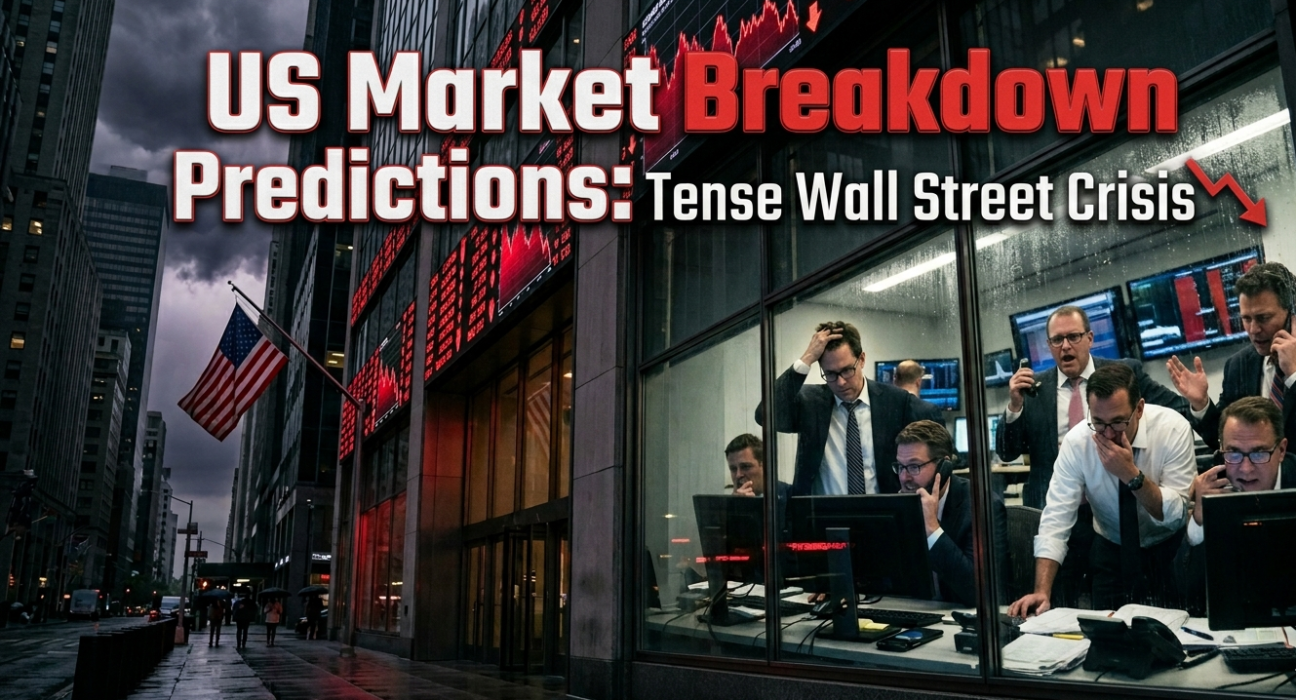
This US market this week has been greatly affected by the presence of geopolitical events, inflation issues, rising interest rates, and economic figures causing a very volatile period in the year 2026.
Market Performance: Volatility Dominates Wall Street
The most interesting thing about this week was that the S&P 500, Nasdaq, and Dow Jones indices were all under selling pressure. It is worth mentioning that the S&P 500 lost nearly 9% compared to its peak level in January, which means that a correction period might be starting in the stock market.
Also, one must mention the fact that for the first time after 2022, there are consecutive losses in the stock markets for several weeks.
Why does this happen? Because investors are now looking for safe investments.
Key Market Drivers This Week
1. Geopolitical Tensions & Oil Price Shock
The most important catalyst for the week was rising tension with Iran. The price of oil rose sharply, with Brent crude rising to $110-$116 per barrel, one of the most significant monthly rises in years.
This surge has triggered global inflation concerns, as higher energy costs impact transportation, manufacturing, and consumer prices worldwide.
2. Inflation & Federal Reserve Policy
Inflation continues to be a major issue. The Fed has maintained interest rates at a constant level but cautioned that an increase in the price of oil could cause another rise in inflation, thus postponing any possible cut in interest rates.
Also, an increase in expected inflation levels has contributed to a rise in bond yields, which has increased the pressure on stocks.
3. Weak Economic Signals
Recent economic numbers have added more uncertainty. Previously, it had been revealed that there were job losses amounting to 92,000 positions in the US economy.
This raised worries regarding slow growth. In addition to this, investors were keenly following jobs, retail sales, and consumer confidence figures.
4. Market Sentiment & AI Concerns
Indeed, apart from conventional considerations, AI disruption and political instability have emerged as important sentiment drivers in 2026.
Market responses to policy indicators and statements by leaders are becoming more critical determinants of short-term movements.
Sector Performance
- Energy sector: Strong gains due to rising oil prices
- Technology stocks: Mixed performance amid valuation concerns
- Consumer sectors: Weak due to inflation pressure
- Financials: Impacted by rising yields and economic uncertainty
Overall, defensive sectors outperformed while growth stocks struggled.
What to Expect Next Week (Market Predictions)
1. Jobs Report Will Be Critical
The key event to watch out for is the upcoming US non-farm payroll numbers. Positive numbers could solidify the rate hike bias, while negative numbers could spur short-term gains.
2. Inflation Data & Fed Outlook
New inflation readings will heavily influence market direction. If inflation rises further due to energy prices, expect continued market pressure and volatility.
3. Oil Prices & Middle East Situation
Markets will remain highly sensitive to any developments in the Middle East. Continued escalation could push oil even higher, increasing fears of stagflation (slow growth + high inflation).
4. Corporate Earnings Impact
Major companies like Nike and Conagra are reporting earnings, which will provide insights into consumer spending trends and corporate resilience.
Final Outlook
The US stock market outlook for next week remains uncertain but highly reactive. Investors should expect:
- Continued volatility
- Strong reactions to economic data
- Sensitivity to geopolitical headlines
it will be highly responsive. For the coming period, despite expectations of gains for later this year in 2026, the situation is delicate.