

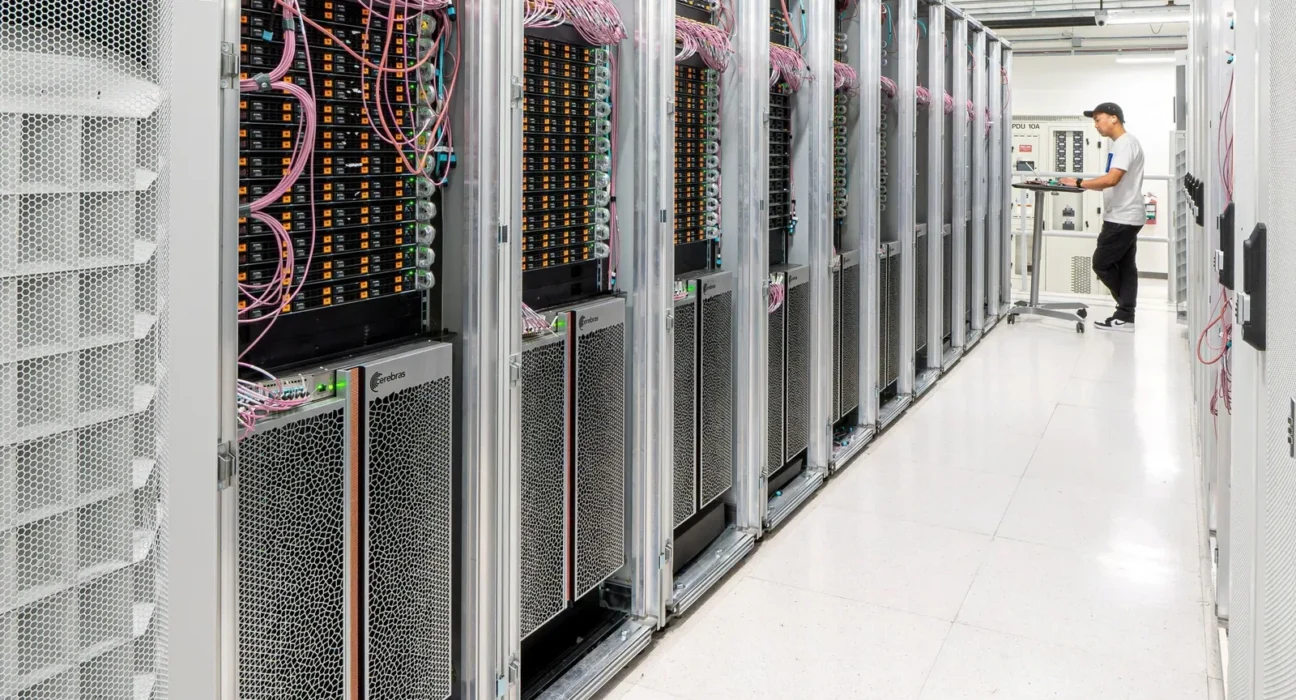
AI Supercomputers: Inside the $500 Billion Bet to Build the Ultimate Computing Revolution
Explore the cutting-edge world of AI Supercomputers revolutionizing artificial intelligence, machine learning, and computational science. From high-performance AI computing to advanced GPU computing AI infrastructure, discover how supercomputer artificial intelligence is reshaping the future of technology and innovation.
Quick Navigation
- Evolution of AI Supercomputers
- Understanding High-Performance AI Computing
- GPU Computing and AI Infrastructure
- Deep Learning Supercomputers
- Global Leaders in Supercomputer Development
- Impact on AI and Technology
- FAQs About AI Supercomputers
The Evolution of AI Supercomputers and Computational Power
AI Supercomputer evolution is perhaps among the greatest technological advancements witnessed in the field of computers. From ideas in the 1990s to revolutionary technology that processes vast amounts of information and powers artificial intelligence around the world today, AI Supercomputers have come far.
Supercomputer artificial intelligence systems have evolved dramatically, transitioning from single-purpose machines to versatile platforms capable of handling multiple AI workloads simultaneously. Today's AI Supercomputers operate at exascale levels, performing quintillions of calculations per second — a computational capacity unimaginable just a decade ago.
From Traditional Computing to AI-Optimized Systems
The shift toward high-performance AI computing marked a fundamental change in how we design computational infrastructure. Traditional supercomputers, designed for scientific simulations and numerical modeling, gave way to machines specifically optimized for training massive neural networks and processing complex AI algorithms. This transformation required entirely new architectures and approaches to data processing.
Understanding High-Performance AI Computing Architecture
High-performance AI computing represents the pinnacle of modern computational engineering, combining cutting-edge processor technology with innovative software frameworks. These systems must handle enormous datasets, execute complex mathematical operations at lightning speed, and maintain reliability across thousands of processors working in perfect synchronization.
Architecture of Modern AI Supercomputers involves parallel computing — the ability to perform billions of computations at once within a distributed system. The advantage with such an architecture allows these supercomputers to solve issues that would have taken centuries for normal computers to resolve in just hours.
Core Components of Supercomputer Systems
Every AI Supercomputer comprises several essential components working in harmony: accelerators (primarily GPUs), high-speed interconnects, massive memory systems, and sophisticated cooling infrastructure. GPU computing AI has become the dominant paradigm, with graphics processing units proving exceptionally efficient at the parallel computations required for neural networks and machine learning applications.
GPU Computing and AI Infrastructure Revolution
GPU computing AI has fundamentally transformed the landscape of artificial intelligence infrastructure. Graphics Processing Units, originally designed for rendering video game graphics, proved perfectly suited for the matrix multiplications and parallel operations essential to deep learning. This serendipitous match between hardware capabilities and algorithmic requirements catalyzed the modern AI revolution.
With GPU-based AI computing in supercomputers, AI researchers were able to exponentially boost their efforts due to shorter training times. Whereas it used to take months or even years to complete training, it would now only take weeks. The possibilities for success became limitless.
Key Advantages of GPU-Based AI Infrastructure
- Massive parallel processing capacity optimized for AI workloads
- Reduced training times for deep learning models by 10-100x
- Energy-efficient computation compared to CPU-only systems
- Scalability across thousands of accelerators
- Support for mixed-precision computing to optimize performance
Deep Learning Supercomputers and Neural Network Training
Deep learning supercomputers represent the most advanced application of high-performance AI computing. Such computers are devoted solely to the training and deployment of massive neural networks — from transformers for language AI to convolutional neural networks handling massive amounts of images.
The computational requirements for modern large language models and vision transformers have grown exponentially. Deep learning supercomputers equipped with thousands of GPUs can now train models with hundreds of billions of parameters, giving rise to incredibly sophisticated and capable AI. These advancements have made generative AI possible.
Scaling Laws and Computational Efficiency
Research has demonstrated predictable scaling laws governing deep learning supercomputer performance. As computational resources increase, model capabilities improve in predictable ways. This understanding has guided investment in larger, more powerful AI Supercomputers, with institutions recognizing that additional computational capacity directly translates to improved AI capabilities.
Global Leaders in Supercomputer Development and AI Infrastructure
The race to build the world's most powerful AI Supercomputers has become a defining competition among nations and technology giants. The United States, China, Japan, and the European Union have all invested billions in creating cutting-edge computational facilities that push the boundaries of what's possible with high-performance AI computing.
Leading organizations recognize that computational power directly enables AI advancement. Companies like NVIDIA, providing GPUs for GPU computing AI systems, have become essential infrastructure providers. Meanwhile, tech giants including OpenAI, Google, and Meta have built proprietary supercomputers to power their AI research and commercial applications.
Landmark Supercomputers in Modern AI
Recent decades have witnessed the emergence of legendary machines pushing computational frontiers. Japan's Fugaku, the EU's LUMI, and various AI-specific supercomputers represent the pinnacle of supercomputer artificial intelligence achievement. These systems, costing billions of dollars and consuming megawatts of power, define the computational substrate upon which modern AI breakthroughs occur.
The Transformative Impact on Artificial Intelligence and Society
AI Supercomputers mark a groundbreaking shift in the abilities of artificial intelligence. It has become possible to train big models on large amounts of data, driving advancements in natural language processing, computer vision, and robotics. None of the current AI breakthroughs would be feasible without supercomputers.
Beyond pure performance, deep learning supercomputers have democratized AI research to some extent. While only the wealthiest institutions can build or operate such machines, cloud-based access to high-performance AI computing resources has enabled smaller organizations and researchers to participate in cutting-edge work.
Accelerated Research Timelines
Training times reduced from months to days, enabling rapid iteration and experimentation in AI development.
Model Scale Expansion
Enabled training of models with trillions of parameters, far exceeding what was possible just years ago.
Economic Transformation
Generated trillion-dollar industries built on AI applications powered by supercomputer capabilities.
Scientific Breakthroughs
Accelerated discovery in fields from drug development to climate modeling to fundamental physics.
Challenges and Future of AI Supercomputing
With the increase in size and computing capacity of AI Supercomputers, new problems arise. The issue of energy consumption has become highly important — some of the supercomputers used for deep learning consume as much energy as a small town.
Additionally, the cost of building and operating such systems creates accessibility challenges. The billion-dollar price tags for cutting-edge supercomputers mean only well-funded institutions can participate, potentially concentrating AI power in few hands and raising questions about equitable access to transformative technology.
Emerging Technologies in AI Infrastructure
Researchers are exploring neuromorphic computing, optical processors, and quantum computing as potential next-generation technologies for AI infrastructure. These approaches aim to achieve greater computational efficiency, reduced power consumption, and fundamentally different computational paradigms that might surpass traditional semiconductor-based GPU computing AI.
Frequently Asked Questions About AI Supercomputers
What is a supercomputer used for in AI?
AI Supercomputers train massive neural networks, process enormous datasets, run complex simulations, and develop sophisticated artificial intelligence systems. Deep learning supercomputers specifically focus on training large language models and other advanced AI applications.
How much does an AI supercomputer cost?
Modern AI Supercomputers typically cost between $1–10 billion to develop and build, with ongoing operational expenses in tens to hundreds of millions annually. The computational power and infrastructure required for high-performance AI computing command premium pricing.
What is GPU computing in AI?
GPU computing AI leverages Graphics Processing Units for artificial intelligence work. GPUs excel at parallel processing, making them ideal for the matrix multiplications and transformations required in deep learning supercomputers and neural network training.
Which countries lead in supercomputer development?
The United States, China, Japan, and the European Union lead in supercomputer artificial intelligence development. Each invests billions in AI infrastructure to maintain competitive advantages in AI research and technological innovation.
What is the future of AI supercomputing?
Future AI Supercomputers will likely pursue greater energy efficiency, explore quantum and neuromorphic computing, and continue increasing raw computational power. The field will likely see specialized deep learning supercomputers optimized for specific AI applications.
Conclusion: The Computing Foundation of the AI Revolution
AI Supercomputers represent far more than impressive engineering achievements. These systems constitute the fundamental infrastructure enabling the artificial intelligence revolution reshaping society. From high-performance AI computing facilities to specialized deep learning supercomputers, these machines translate theoretical AI concepts into practical, world-changing applications.
Further investments in supercomputer-based artificial intelligence and GPU computing AI infrastructure prove that computational power is an essential element for the future of technology. In a world where AI plays such a vital role in science and economy, AI infrastructure itself is a key issue for countries around the world.
The trajectory is clear: as computational capacity expands, AI capabilities will continue advancing. Understanding AI Supercomputers and their role in modern technology is essential for anyone seeking to comprehend the forces shaping our technological future. The machines powering today's AI breakthroughs will prove as foundational to the 21st century as electricity was to the 20th.
Disclaimer: This article provides current information about AI supercomputing technology and infrastructure. Technology specifications and capabilities evolve rapidly.