

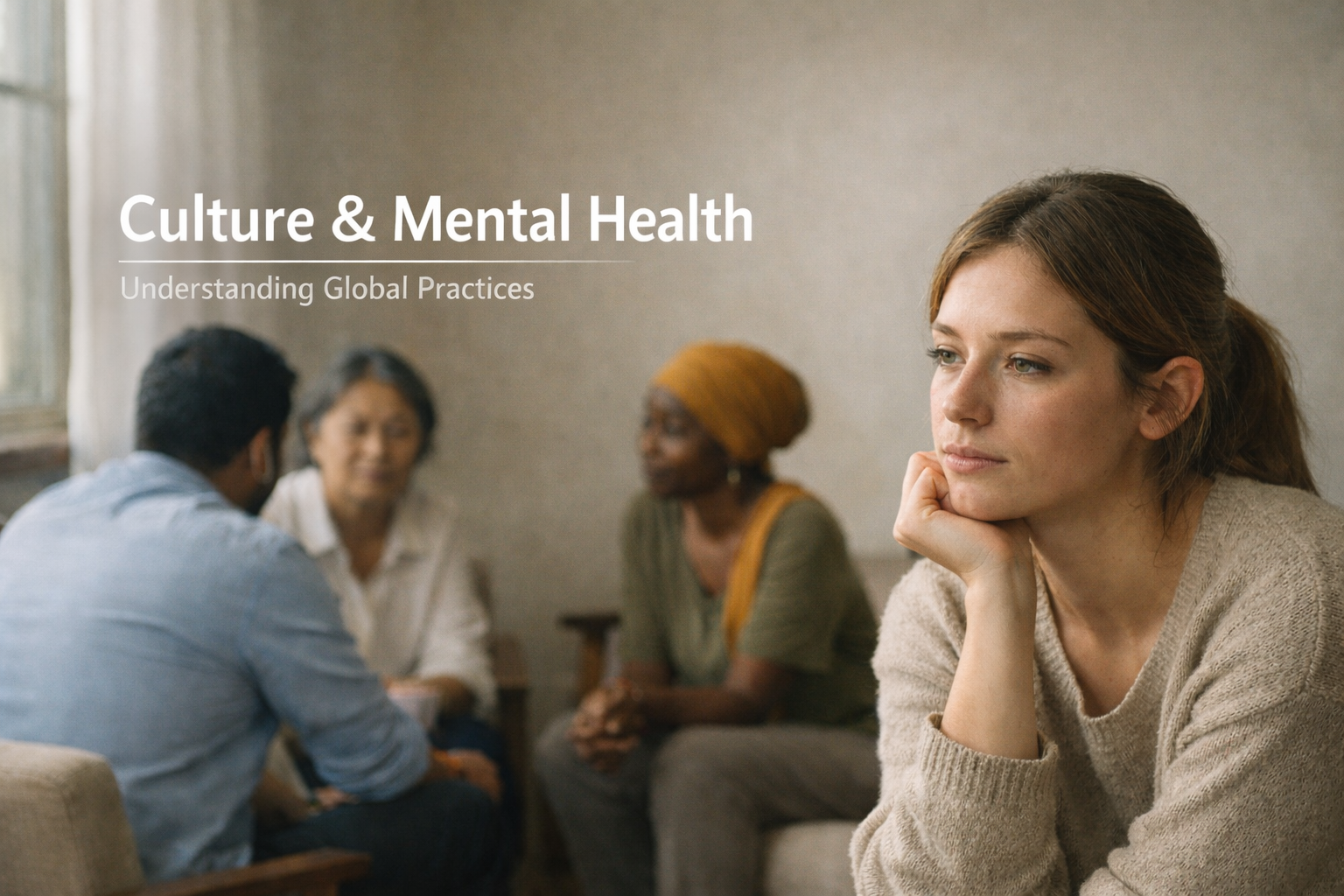
Mental health is a worldwide problem, but there is no single approach to it across the globe. Culture has a huge influence on how people perceive feelings, seek assistance, and react to treatment. By 2026, when the world becomes increasingly aware of the issue, understanding how culture influences mental health behavior will be necessary.
Understanding Culture’s Role in Mental Health
Culture affects one’s thinking, behavior, and communication styles. This has a direct impact on one’s mental well-being in many ways, such as symptom recognition and help-seeking behavior.
For instance, what constitutes an anxiety disorder in one culture may not necessarily be so in another. Some cultures view emotional issues in terms of somatic experiences, while others discuss psychological issues more freely.
This is just to illustrate that cultural competency is a crucial aspect of any mental health practice.
Beliefs and Perceptions Around Mental Health
Cultural beliefs strongly shape attitudes toward mental health conditions.
- In some societies, mental health issues are linked to spiritual or religious interpretations
- Others may associate them with personal weakness or lack of resilience
- In more modern systems, mental health is approached through clinical diagnosis and therapy
These differing perspectives influence whether individuals feel comfortable acknowledging their struggles or seeking professional help.
The Impact of Stigma Across Cultures
Stigma continues to be one of the major barriers in providing mental health care. In many cultures, speaking about mental health openly is not encouraged, resulting in silence and unattended cases.
People may avoid seeking help due to:
- Fear of social judgment
- Concerns about family reputation
- Lack of awareness about available treatments
Addressing stigma involves education and cultural awareness in places where mental illness is still a taboo subject.
Different Cultural Approaches to Treatment
Mental health practices vary widely depending on cultural context.
Clinical and Individual Approaches
In many Western societies, treatment often includes:
- Therapy sessions such as counseling or cognitive-based approaches
- Medication for managing symptoms
- Focus on individual healing and self-improvement
Community and Traditional Approaches
In other parts of the world, healing may involve:
- Family and community support systems
- Spiritual guidance or religious practices
- Traditional remedies passed down through generations
In 2026, there is increasing recognition that combining these approaches can lead to more effective outcomes.
Why Cultural Awareness Matters in Care
The need for cultural awareness is becoming increasingly important in the field of mental health care. Failure to achieve this can lead to problems such as misinterpretation, wrong diagnoses, and poor treatment outcomes.
Culturally informed care helps to:
- Build trust between patients and providers
- Improve treatment engagement
- Deliver more personalized and relevant support
This development is propelling the expansion of mental health care programs globally.
Emerging Trends in 2026
Globalization and technology are transforming how mental health care is delivered.
Key trends include:
- Expansion of online therapy platforms across different regions
- Increased awareness through digital content and social media
- Greater demand for culturally adaptable mental health solutions
These developments are helping bridge gaps between traditional beliefs and modern practices.
Ongoing Challenges
Despite progress, several challenges continue to affect global mental health care:
- Shortage of culturally trained professionals
- Limited access to services in rural or underserved areas
- Language and communication barriers
- Persistent stigma in conservative societies
Addressing these issues requires collaboration between governments, healthcare providers, and communities.
Conclusion
Culture plays a role in all aspects of mental health – from its definition to its treatment. It is important to acknowledge these differences to establish systems that really benefit everyone, no matter their culture.
In the future, more emphasis will be placed on treatments that recognize the individual’s culture and still provide appropriate care.
Culture will play an important role in the future of mental health.
Leave feedback about this