

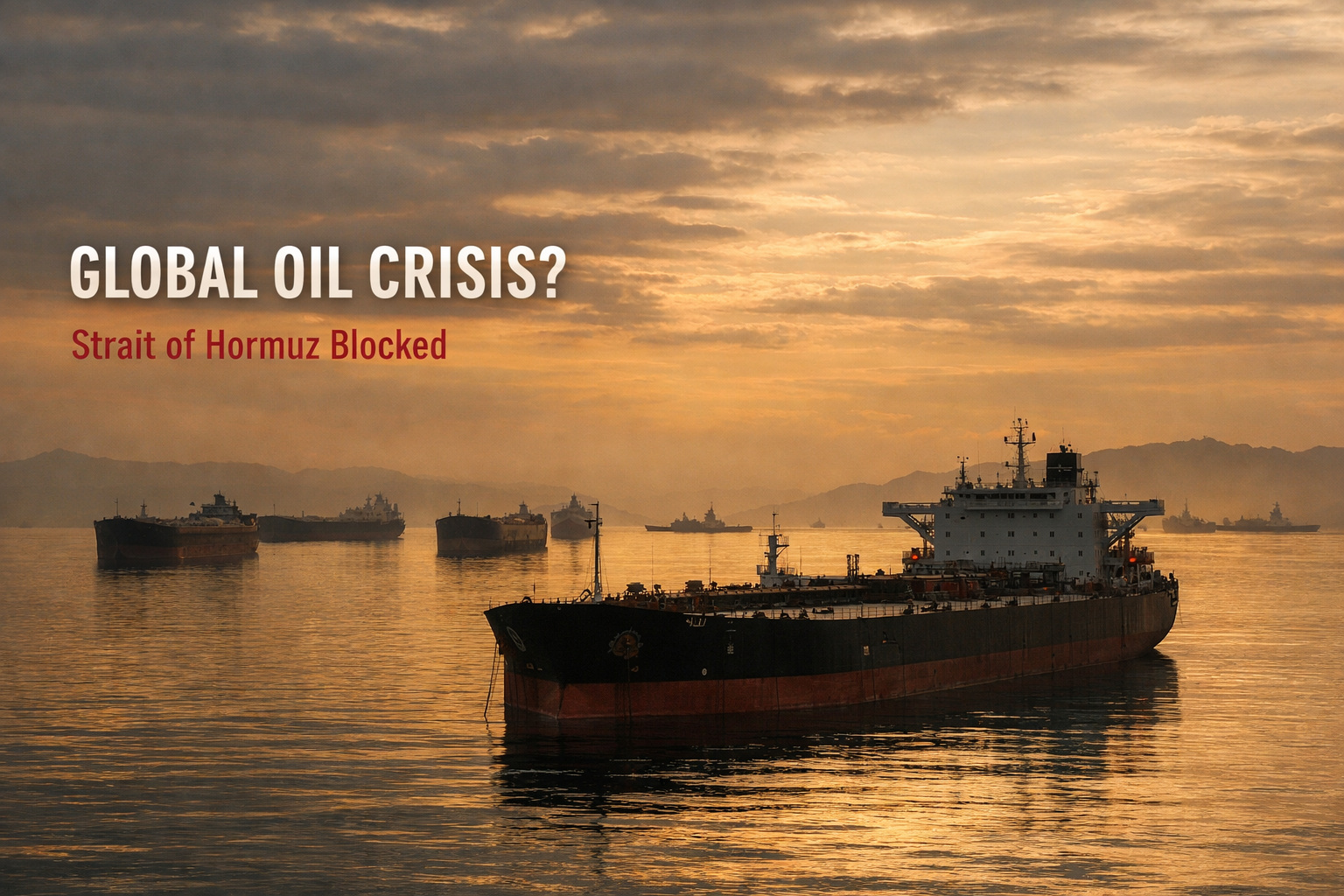
The economy of the entire world is very much connected, but few places have as much importance to the economy as the Strait of Hormuz. The Strait of Hormuz is one of the most important routes for oil transportation through which oil from the Middle East region is taken out to different parts of the world. It plays an important role in the global economy.
An immediate effect of such an attack would be a sudden rise in global oil prices. Almost 20% of the total oil transported around the globe travels through this vital chokepoint. Any attack on the strait will cause major disruptions in the supply chain, causing a global crisis in the energy sector. The price of oil will rise sharply within a matter of days.
With an increase in the price of oil, there would be an immediate rise in inflation. Nations that rely extensively on foreign oil imports would find themselves under enormous economic strain. Increased fuel prices would cause the prices of commodities and services to shoot up, thus decreasing the purchasing capacity of consumers.
There will also be a serious disruption in global trade activities. The Strait of Hormuz is not only an oil route, but also a shipping lane that ensures the smooth functioning of international trade. A long-term closure of this channel would result in disruption in supply chain logistics, late delivery of goods, and higher shipping expenses.
The emerging economies are most likely to suffer in this case. This is because many emerging countries depend greatly on energy prices to ensure that there is an environment of growth. An abrupt rise in the price of oil can affect their exchange rates, make them take debt, and attract less foreign investments.
In addition to this, other non-Gulf-based countries who produce oil could have short-term gains. The rise in prices of oil for these countries with alternate channels for exporting oil could result in more money, but that would soon be nullified because of the global recession due to decreased energy demands from the economy.
The financial markets would experience turbulence. The stock exchanges all over the globe may experience sudden plunges because of the uncertain environment and soaring costs. At first, the energy stocks would rally, but ultimately, the markets would be gloomy. The safe-haven currencies, including the precious metal gold and the American dollar, may gain popularity.
Yet another key aspect is the presence of geopolitical tensions. A prolonged shutdown of the Strait of Hormuz will only exacerbate existing tensions, increasing uncertainty in the region. Such developments will deter investment and affect the business plans of countries both within and outside the region.
As a consequence, governments will be compelled to expedite their attempts at energy diversification. Renewable energy sources, alternate pipelines, and national oil stockpiles will all take on added significance. In addition, there will be a greater emphasis on securing energy sources by limiting reliance on sensitive regions such as the Strait of Hormuz.
Finally, if the Strait of Hormuz is to remain blockaded, the economy of the world will face a sequence of difficulties. For instance, there will be an increase in oil prices, resulting in inflation and unstable trading relations. Although there might be some advantages for a few countries, in general, the consequences will be adverse, leading to economic instability and slow economic growth worldwide.
Leave feedback about this